
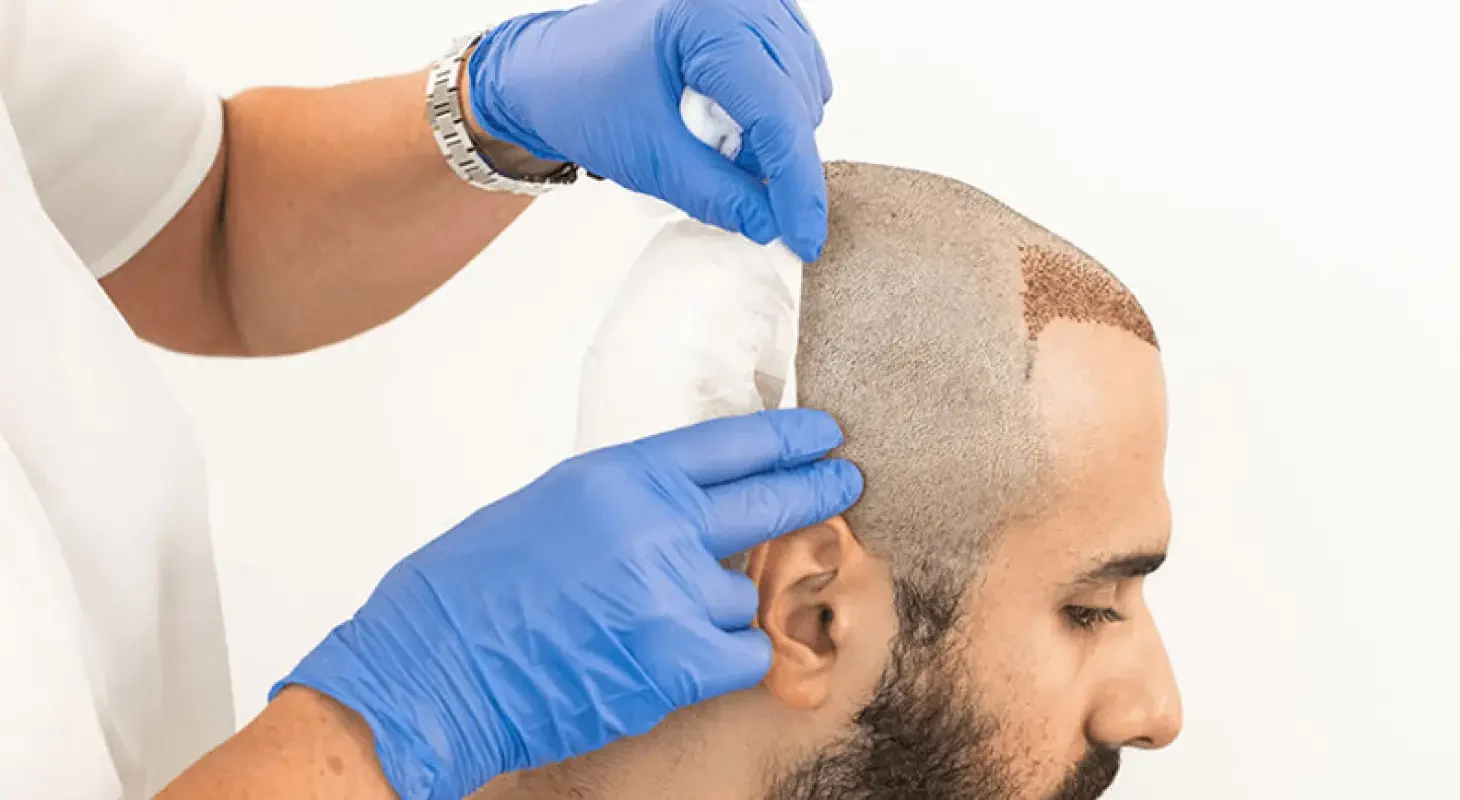
Clinics talk about grafts, techniques and density. Patients talk about something else: the years of avoiding photos, the cap that never comes off, the moment they stopped recognising themselves in the mirror. Hair restoration is an emotional journey before it is a medical one — and understanding the emotional stages makes the whole process easier, from the first search to the final result.
Before: the quiet cost of hair loss
Hair loss rarely hurts, but it is one of the most common triggers of lost confidence in men and women alike. Patients describe a slow withdrawal: fewer social photos, hats indoors, avoiding swimming, choosing the seat with their back to the window. Research on the psychology of hair loss consistently links it to lower self-esteem and, in some people, anxiety or depressive symptoms. If that is you, it is not vanity — it is a normal response to a visible change you did not choose.
Deciding: doubt, research, and the fear of regret
The decision phase is where most people stall. Two fears dominate: “What if it looks fake?” and “What if I am being scammed?” Both are healthy. The answer to the first is technique and surgeon skill — modern DHI and Sapphire FUE place single follicles at natural angles; the pluggy results of the 1990s are gone. The answer to the second is verification: licensed physicians with public registry numbers, fixed written quotes, and reviews you can check yourself. Patients who do this homework describe a distinct emotional shift from anxiety to relief once the facts are on the table.
Procedure day: less dramatic than you imagine
Almost every patient says the same thing afterwards: “That was it?” Local anaesthesia, a long but comfortable day, music or a film during implantation, and a walk to the hotel in the evening. The anticipation is usually far worse than the experience. Travelling patients often report the trip itself — Tirana, the hotel, the coordinators — as unexpectedly pleasant, because they finally did something about a problem they carried for years.
Weeks 3–8: the emotional low point (and why it is normal)
This is the stage clinics under-warn about. The transplanted hairs shed — shock loss — and for several weeks you look like the procedure never happened. Patients who were not prepared feel genuine grief and doubt. Patients who were prepared shrug and wait. The follicles are alive; only the shafts fell. Our recovery timeline explains this phase in detail precisely because expectations are the best emotional protection.
Months 4–9: the first time you see it
New growth comes in thin and soft, then thickens. Somewhere between months 5 and 8 most patients have a moment — a photo, a comment from a friend, a haircut — where they see the hairline they planned. This is typically described as the single most rewarding point of the journey, and it arrives quietly.
After: what actually changes
A transplant does not change who you are. What patients report is subtler and, for many, more valuable: hats come off, photos are fine, the mirror stops being a negotiation. The energy that went into hiding goes elsewhere. That is the real outcome, and it is why the emotional side deserves as much planning as the medical one.
How a good clinic supports the emotional journey
Honest candidacy assessment (including “not yet” for young patients), clear expectations about shedding and timelines, and a real person to message at week 6 when doubt hits. At Nouvelle Clinique, coordinators follow every patient through the full 12–15 months for exactly this reason — the medical result is planned on day one; the emotional result is supported every week after.
Frequently asked questions
Is it normal to feel anxious before a hair transplant?
Completely. Most patients report anxiety peaking in the days before travel and dissolving within the first hour of the procedure. Preparation and a clear plan are the best antidotes.
Why do I feel worse a month after the transplant?
Because of shock loss — the transplanted hairs shed before regrowing. It is temporary and expected, but emotionally it is the hardest phase. Knowing it is coming makes it manageable.
When will I feel confident about the result?
Most patients describe a turning point between months 5 and 8, when new growth becomes clearly visible. Full confidence usually arrives with the final result at 12–15 months.
Can a hair transplant fix self-esteem problems?
It removes a specific, visible trigger — which for many people makes a large difference. It is not a treatment for underlying mental health conditions, and an honest clinic will say so.
Do patients regret getting a hair transplant?
Regret is rare when the candidacy assessment was honest and expectations were realistic. The regret patients most often express is not having done it years earlier.
Start with a conversation, not a commitment
Book a free consultation — no obligation, just an honest assessment and a clear picture of what the journey would look like for you.
Medical review: the clinical information on this page is reviewed by the Nouvelle Clinique medical team under the supervision of Dr. Elvira Frangu, MD (Faculty of Medicine, University of Tirana; Order of Physicians of Albania, Registry No. 3973). This content is informational and is not a substitute for an individual medical consultation.