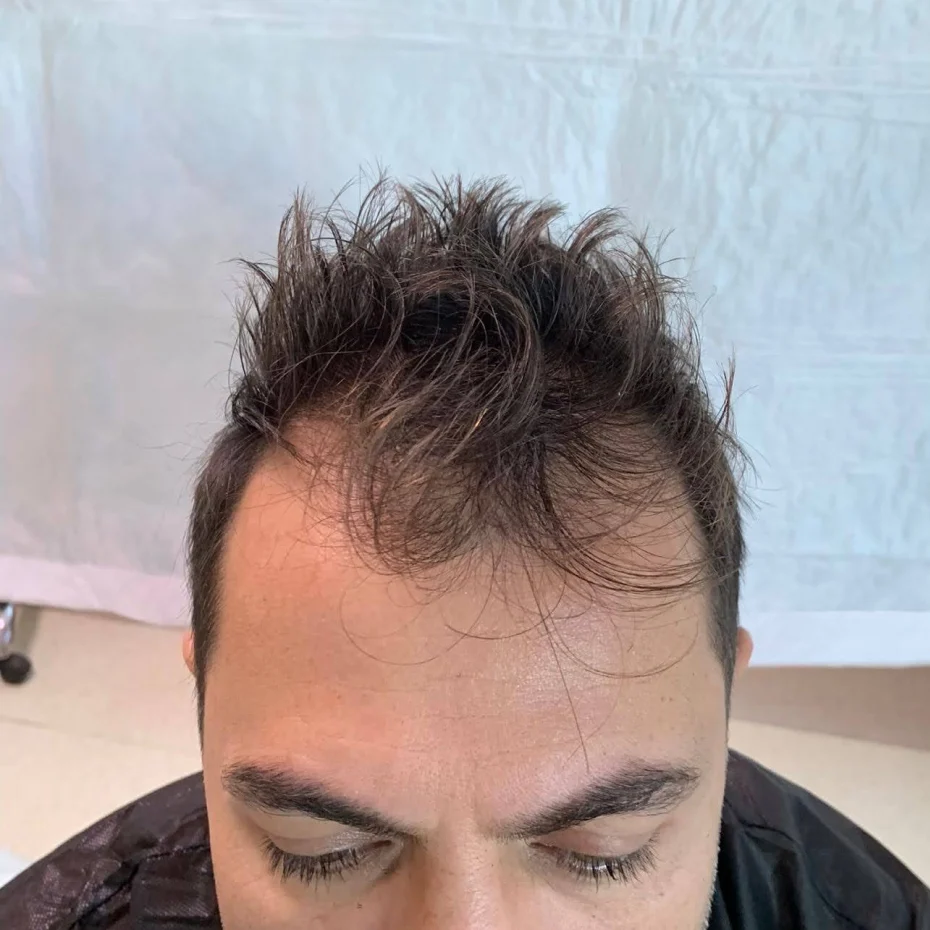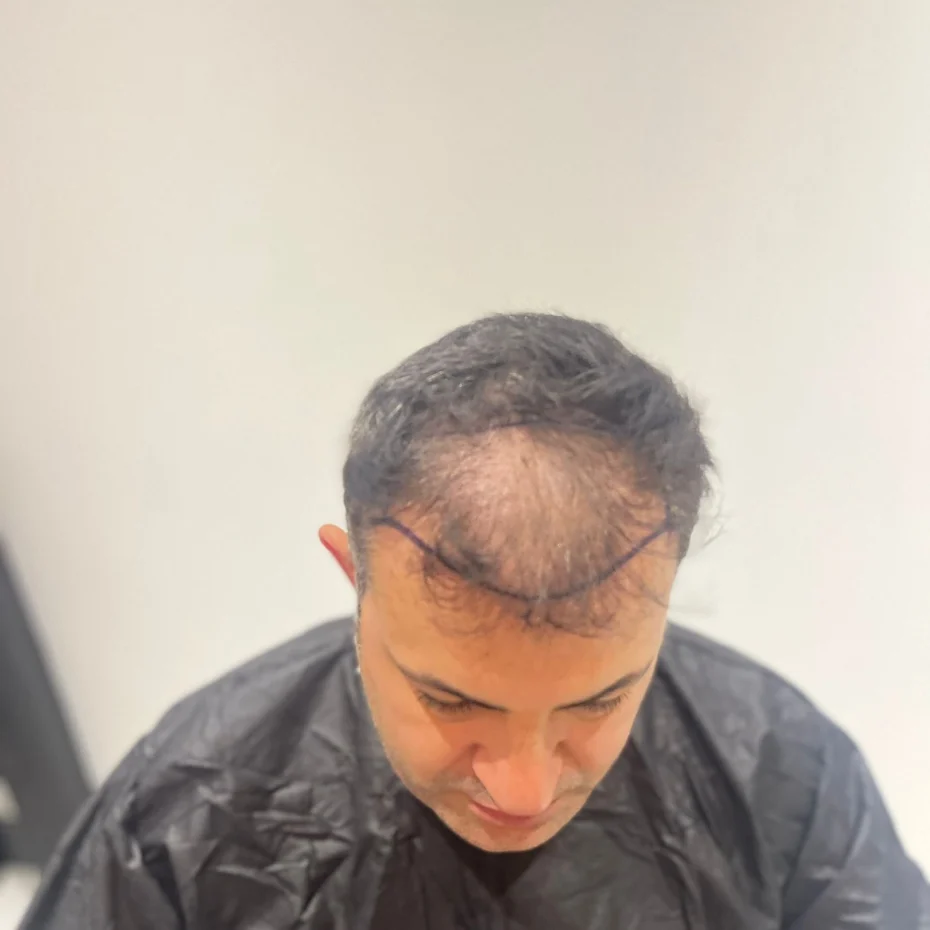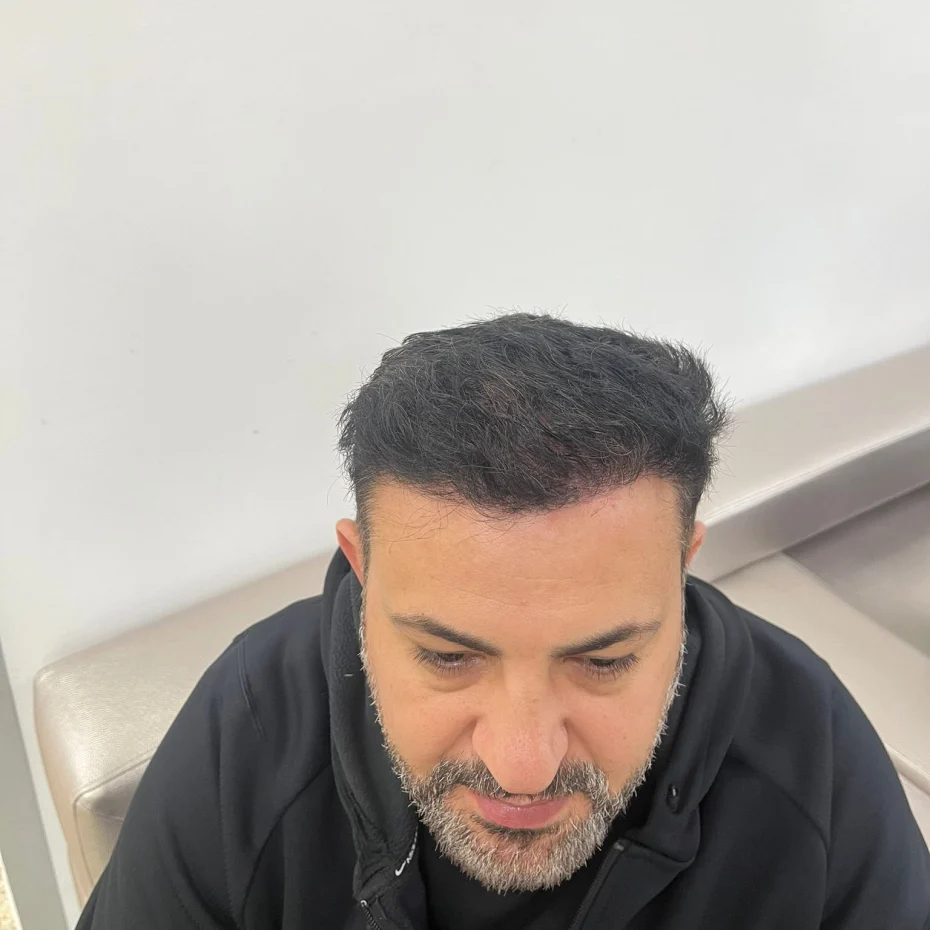
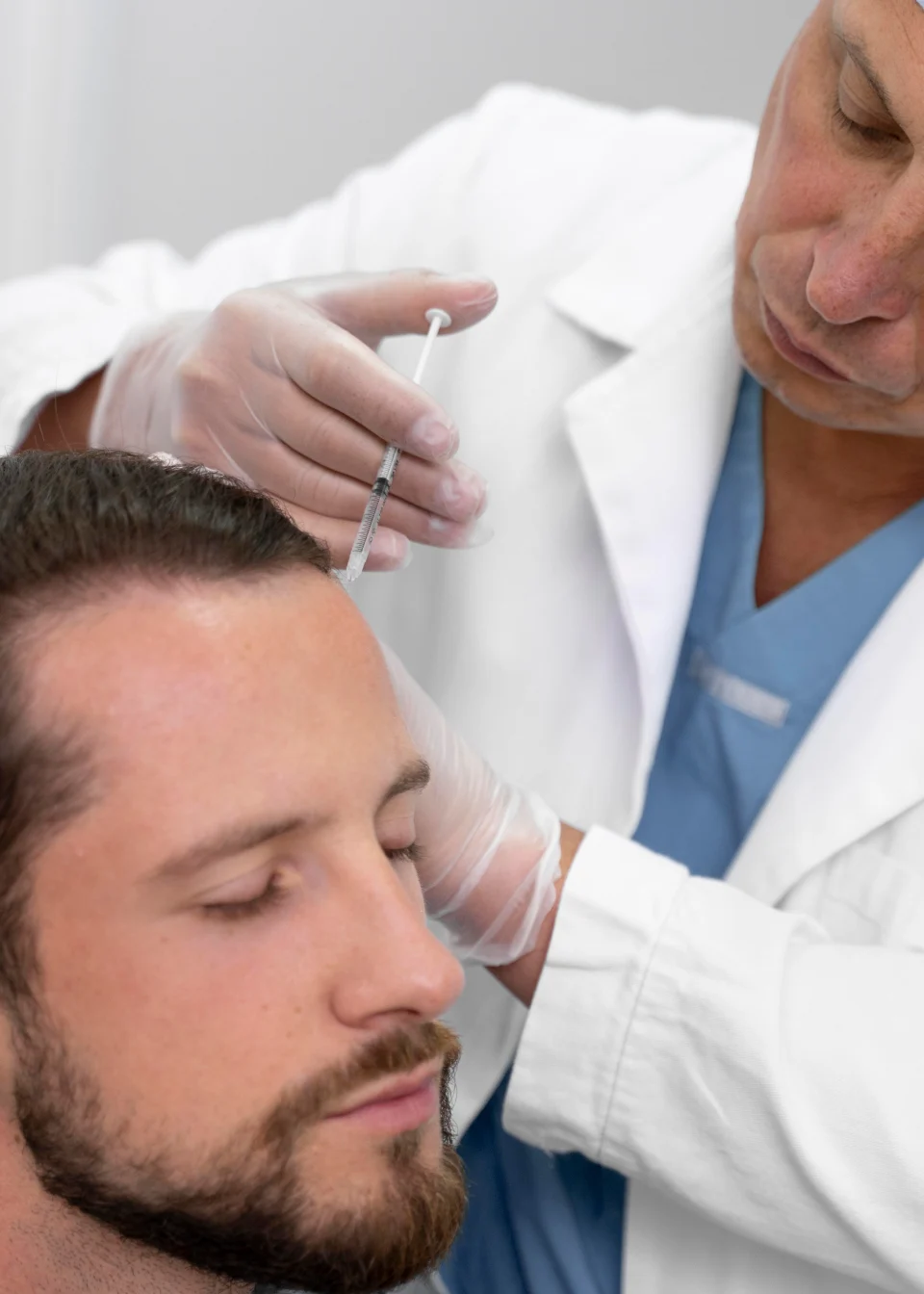

Sapphire FUE is a hair transplant in which follicles are extracted one by one and placed in fine channels opened with a blade made of sapphire crystal. Opening the channels first lets the team cover a large area in one session, which makes this the usual technique for a thinning crown, a wide bald area or a plan with a high number of grafts.
Sapphire FUE at a glance
| Who it is for | Larger bald or thinning areas, the crown, advanced hair loss |
| Technique | Grafts are placed in channels opened with a sapphire blade |
| Grafts | About 2,500 to 4,000 or more in a session |
| Anaesthesia | Local |
| Time in the clinic | Usually 6 to 8 hours; you leave the same day |
| Back to desk work | 4 to 7 days; the shaved scalp shows for 10 to 14 days |
| First growth | From month 3 to 4 |
| Final result | At 12 to 15 months |
| Price at Nouvelle Clinique | €1,500 to €3,000; full package €2,500 |
How Sapphire FUE works
The procedure has three stages. First, follicles are removed one by one with a fine punch from the donor area at the back and sides of the head. Second, the surgeon opens the channels that will receive them, which sets the angle, direction and spacing of the future hair. Third, the grafts are placed in those channels.
The sapphire blade is used in the second stage. It is sharper and smoother than a steel blade and keeps its edge through the session, so the channels can be made fine and uniform and matched to the size of the grafts.
Sapphire FUE and classic FUE: what changes
| Stage | Classic FUE | Sapphire FUE |
|---|---|---|
| Extraction | One by one, with a micro-punch | The same |
| Channels | Opened with steel blades | Opened with sapphire blades |
| Incisions | Fine | Finer and more uniform, so grafts can sit closer together |
| First days | Swelling and crusts | Often less swelling and crusting |
| Scars | No linear scar | No linear scar |
The blade is a refinement, not a different operation. The plan, the angle of the channels and the handling of the grafts decide the result far more than the material of the blade.
The procedure step by step
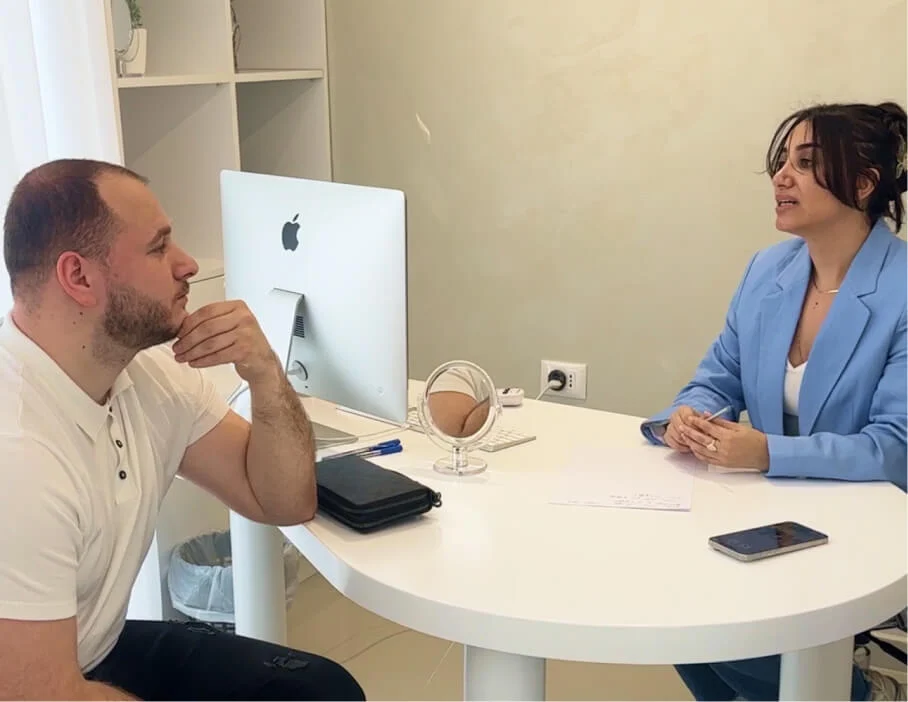
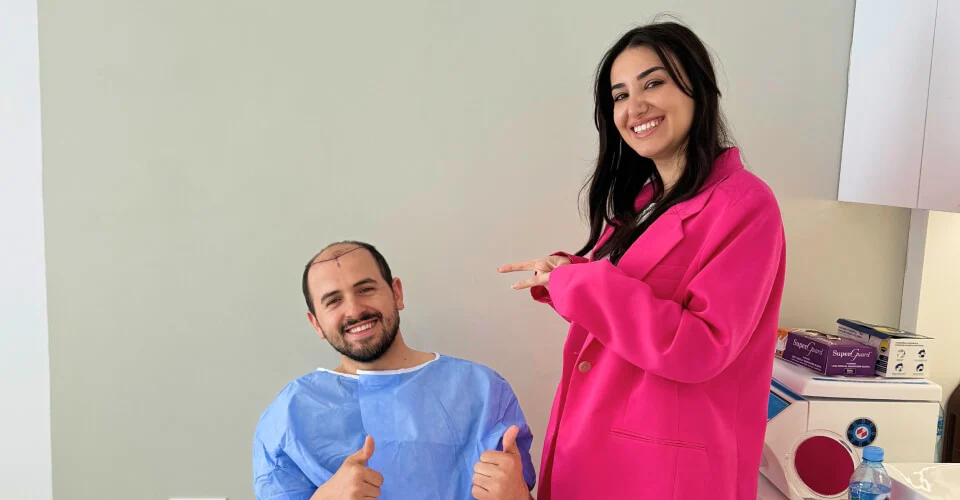
- Planning. The hairline and the areas to cover are drawn and agreed with you, and photos are taken.
- Local anaesthesia. The donor and recipient areas are numbed. You stay awake and feel pressure, not pain.
- Extraction. Follicles are taken one by one from the donor area, sorted and kept cool.
- Opening the channels. The channels are made with the sapphire blade, following the direction of your natural hair.
- Placing the grafts. The grafts are set in the channels, with single-hair grafts along the front line.
Who Sapphire FUE suits
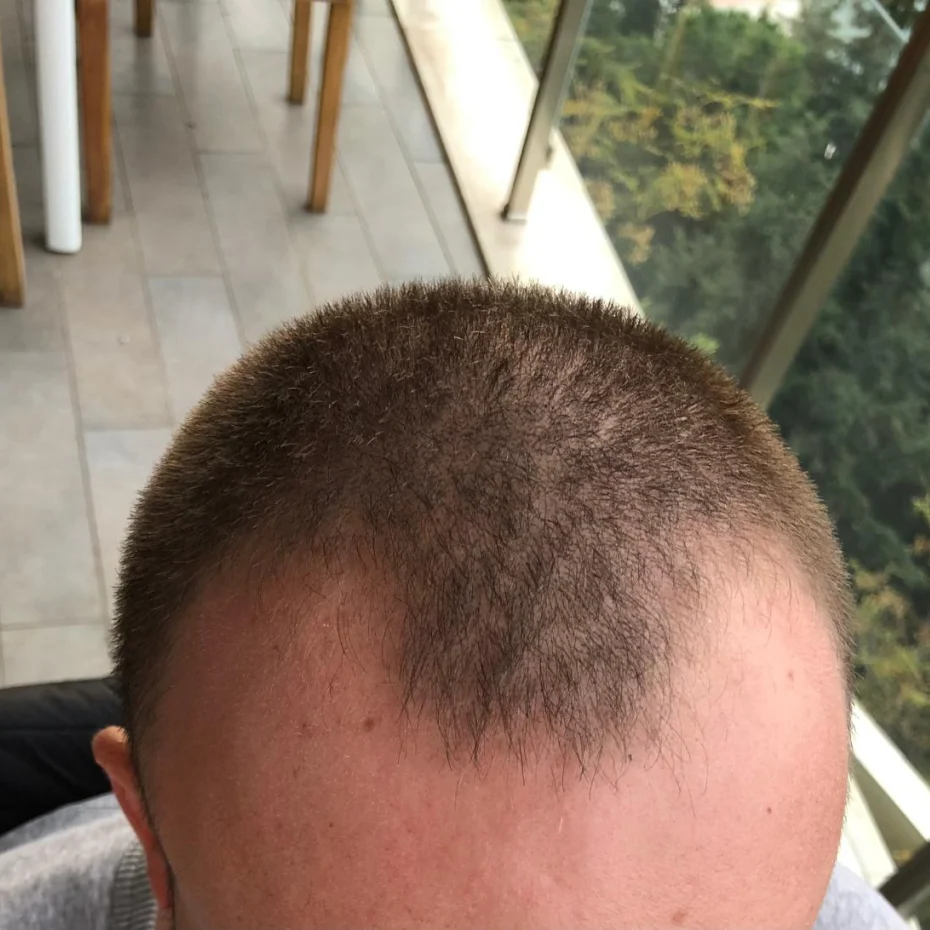
It suits patients who need coverage more than fine detail: a crown that has thinned, a large area on top, or hair loss at the higher stages of the Norwood scale. Good candidates have a stable pattern of loss, a donor area with enough healthy hair and realistic expectations about density.
Where the hairline also needs rebuilding, the front is often done with DHI and the area behind it with Sapphire FUE, in the same session. The technique comparison explains how the choice is made.
Before the procedure
In the 7 to 10 days before, stop smoking and alcohol, which reduce blood flow to healing skin. Tell the medical team about every medication and supplement you take; any change to a prescribed medicine is decided with your doctor, not on your own. Do not shave your head before you travel: the team trims what the technique needs on the day.
Recovery and results
| Period | What happens |
|---|---|
| Days 1 to 3 | Mild swelling and redness while the grafts settle |
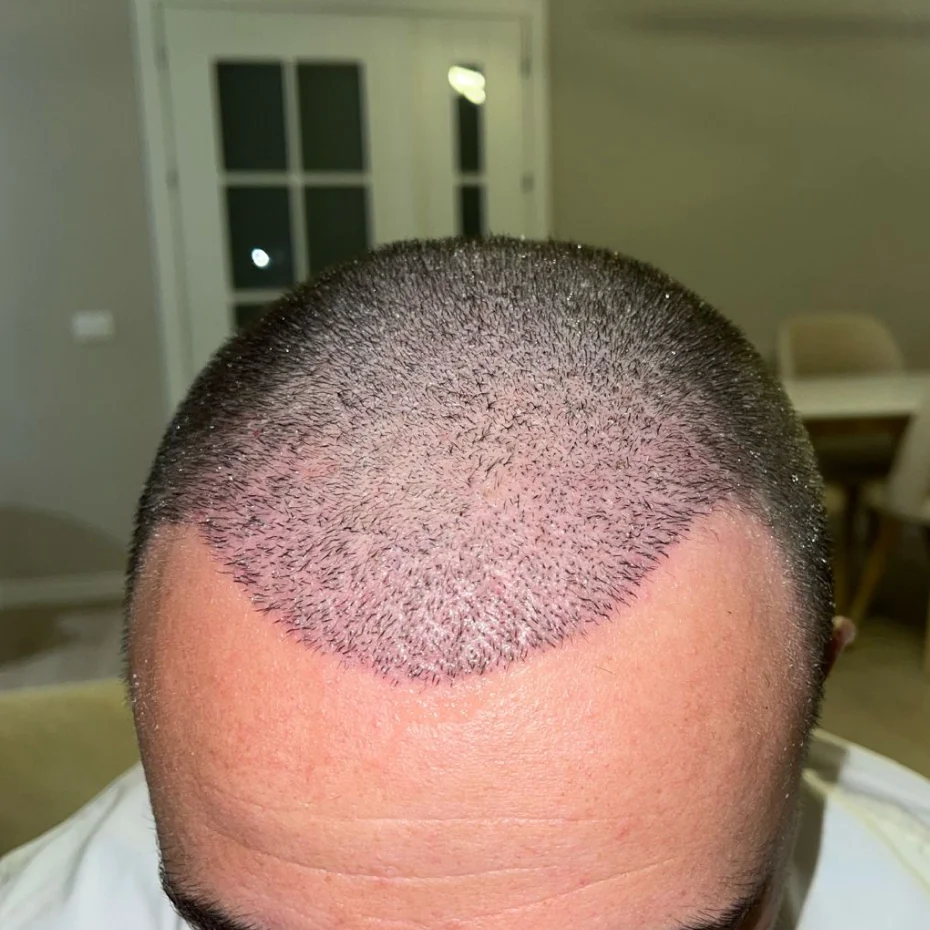
| Days 4 to 7 | Small crusts form; first gentle wash; most patients fly home and return to desk work |
| Week 2 | The crusts fall away and the scalp looks clean |
| Weeks 3 to 8 | The transplanted hairs shed. This is expected: the follicles stay in place |
| Months 3 to 6 | New growth starts, fine at first |
| Months 6 to 12 | The hair thickens and density builds |
| Months 12 to 15 | Final result |
Each stage, with what to do and what to avoid, is covered in our week-by-week recovery guide.
Risks and side effects
Swelling of the forehead, redness, itching and mild discomfort are common in the first days and pass on their own. Some existing hair near the grafts can also shed for a while. Infection, patchy growth and poor graft survival are uncommon when the aftercare is followed, and your medical history is reviewed beforehand to reduce these risks.
What a Sapphire FUE hair transplant costs in Albania
At Nouvelle Clinique hair transplant packages range from €1,500 to €3,000, depending on the number of grafts. The full package is €2,500 and covers the procedure, pre-operative blood tests, medication and care products, the hotel in Tirana, airport transfers and follow-up. Published figures put a 2,500-graft procedure in Italy or Germany at about €7,000, without travel or hotel. You receive a fixed written quote after a free consultation, and the date is reserved with a €200 deposit. The 2026 cost guide has the full breakdown.
Frequently asked questions
What is the difference between Sapphire FUE and classic FUE?
Extraction is the same. The difference is the blade that opens the channels: sapphire instead of steel. It makes finer, more uniform incisions, which usually means less swelling and crusting and lets grafts be placed closer together.
Is Sapphire FUE better than DHI?
Neither is better in every case. Sapphire FUE covers large areas efficiently; DHI gives more control graft by graft and can be done without shaving in small sessions. Many patients have both in one plan.
How many grafts can be placed in one session?
Typically about 2,500 to 4,000, sometimes more. The limit is your donor area, not the technique. Larger needs are usually split into two sessions.
Will I look normal after 10 days?
Mostly. The crusts have usually gone by then and the redness is fading, but the hair is still very short and the outline of the treated area can be seen. Most patients are back at desk work within the first week.
Does Sapphire FUE leave scars?
There is no linear scar. Extraction leaves tiny dots in the donor area that are hard to see once the hair grows back.
Is the procedure painful?
The scalp is numbed with local anaesthesia, so during the procedure you feel pressure, not pain. The numbing injections sting briefly, and most patients describe mild soreness for a few days afterwards.
When will I see the final result?
New growth starts around month 3 to 4, the biggest change comes between months 6 and 9, and the final result shows at 12 to 15 months. The crown can take a little longer than the front.
Find out whether Sapphire FUE fits your case
Book a free consultation and send photos of your hairline, crown and donor area. You will get a graft estimate, a technique recommendation with the reasons for it, and a fixed written quote. You can see healed cases in our before-and-after results.
Guides to read before you decide
- DHI vs Sapphire FUE: Which Hair Transplant Technique Is Right for You?
- How Much Does a Hair Transplant in Albania Cost? 2026 Price Guide
- Hair Transplant Recovery Timeline: Week by Week Guide
- Hair Transplant Results After 12 Months: What Is Final and What Is Not
- Hairline Design in a Hair Transplant: How a Natural Hairline Is Planned (2026 Guide)