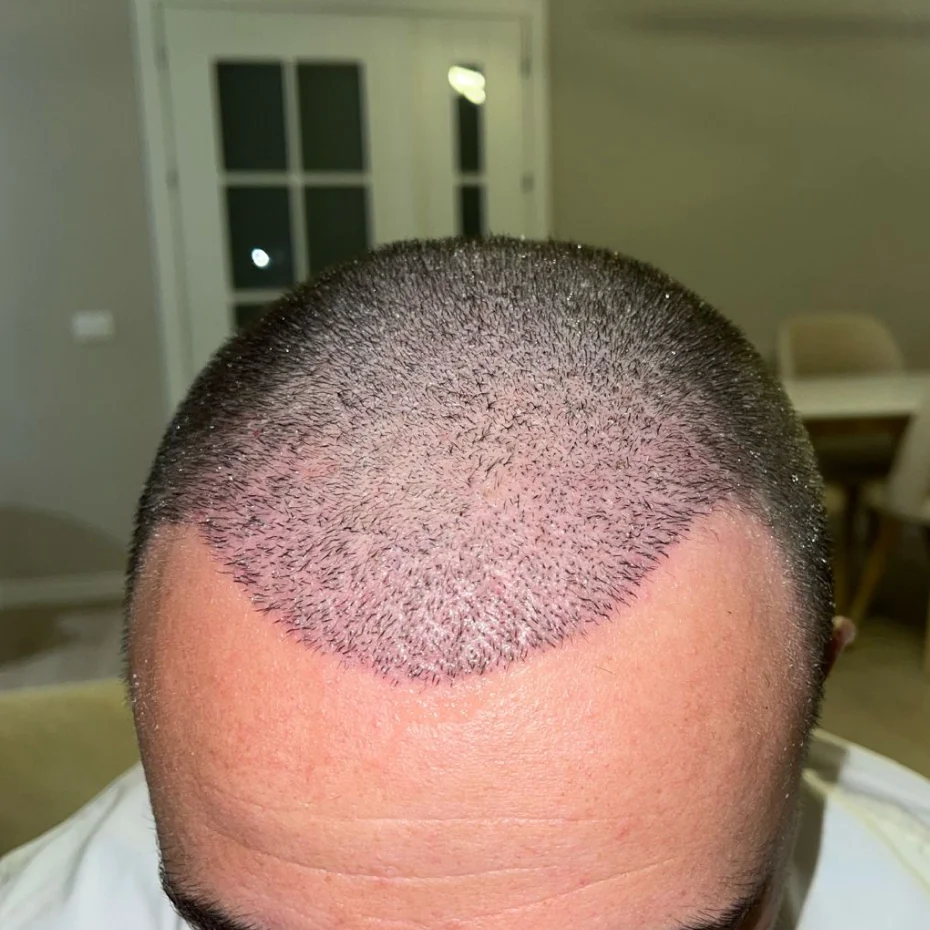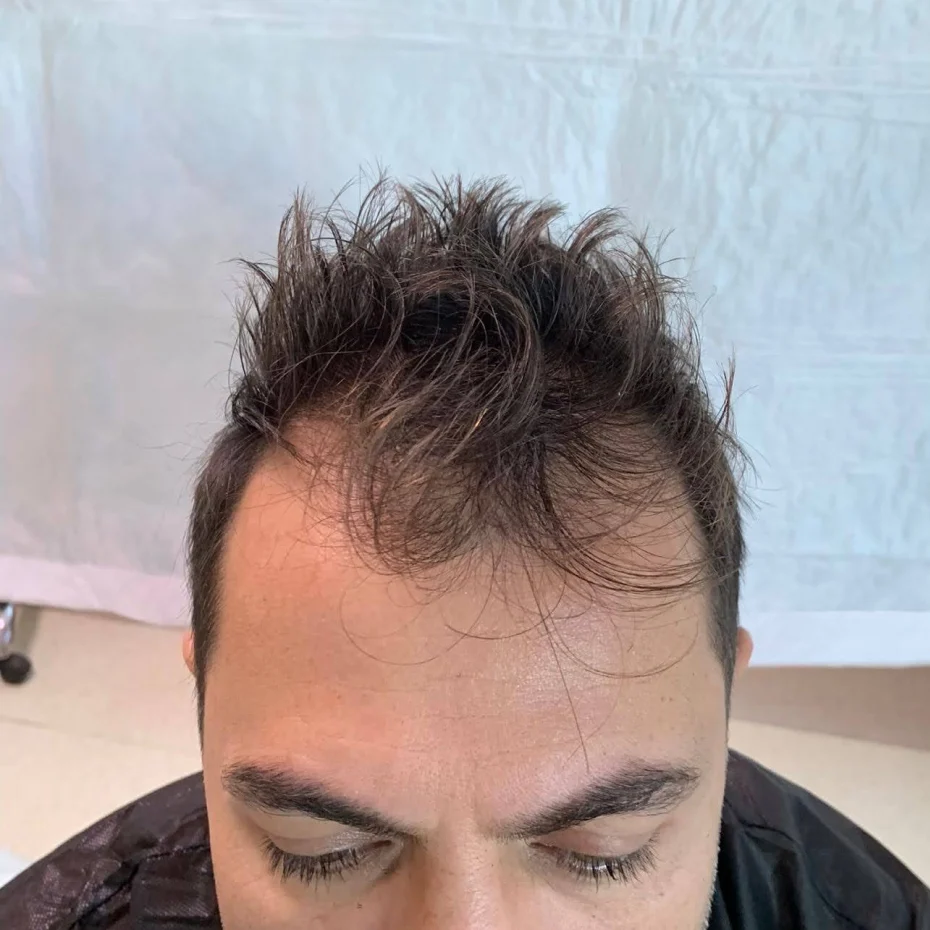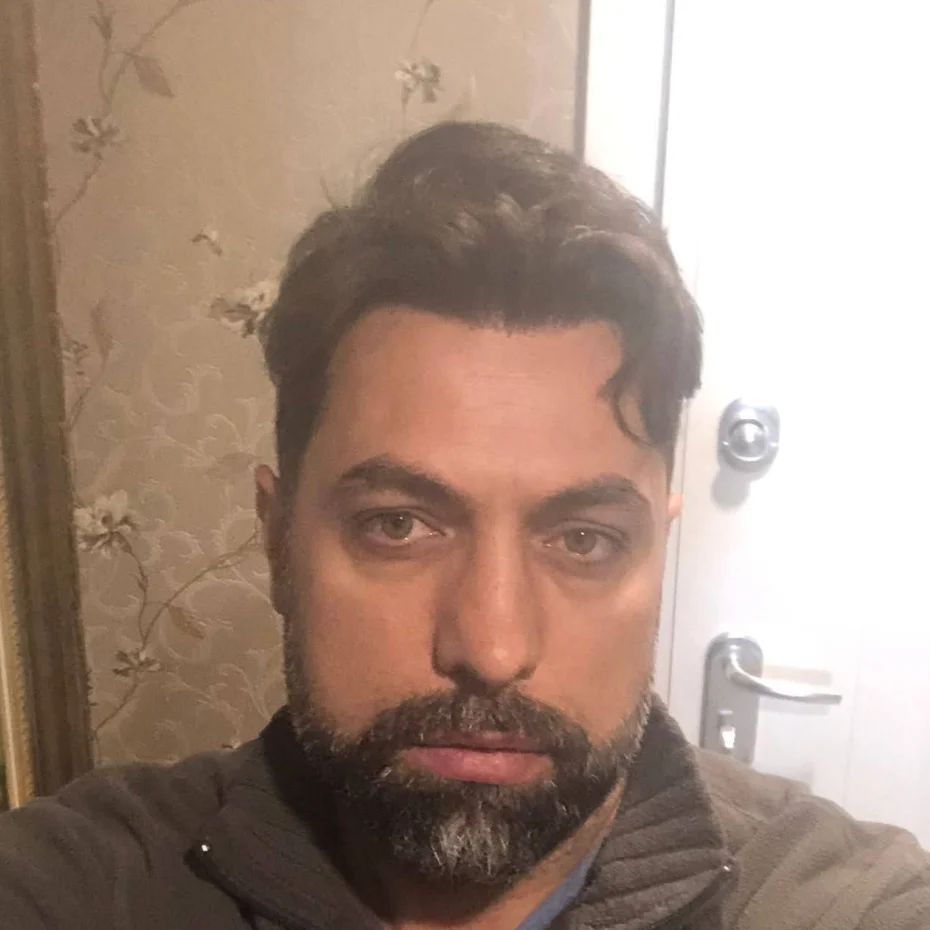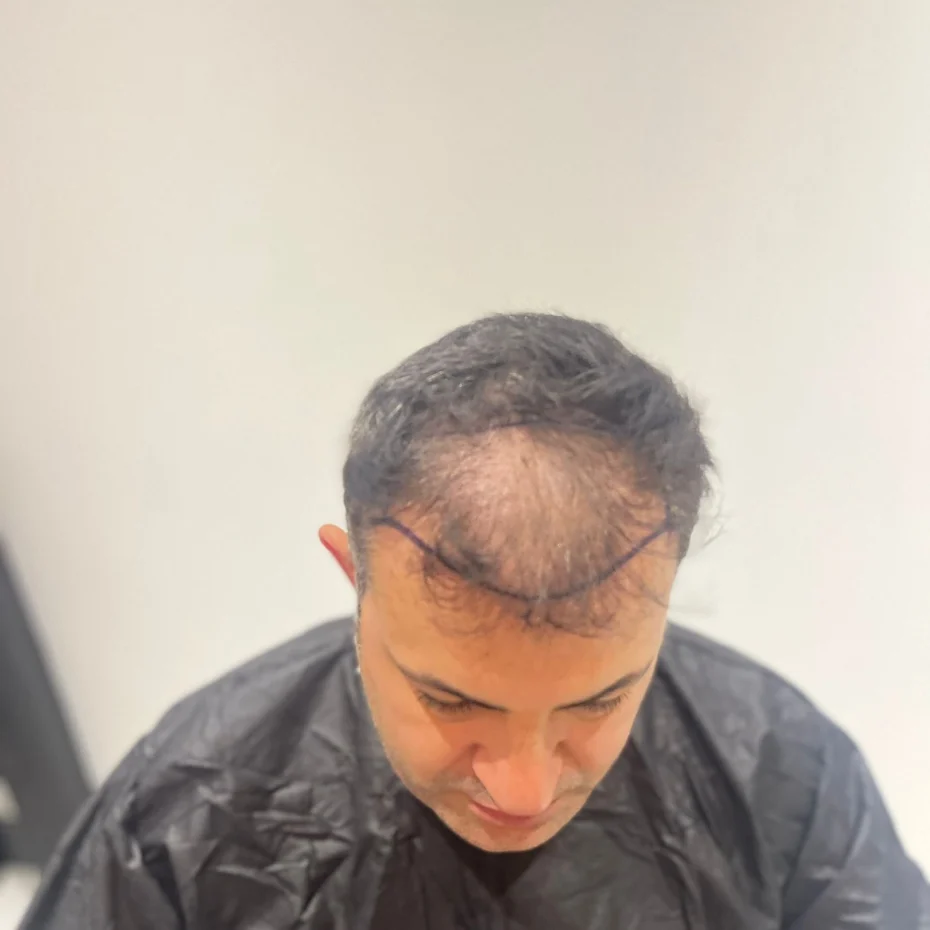

DHI stands for Direct Hair Implantation. Follicles are taken one by one from the back of your head and placed with an implanter pen, which opens the site and sets the graft in a single movement. No channels are cut in advance. That gives the surgeon control over the angle, depth and direction of every hair, and it is why DHI is the usual choice for hairlines and for adding density between existing hair.
DHI at a glance
| Who it is for | A receding hairline, thinning between existing hair, smaller areas, patients who do not want a full shave |
| Technique | Each graft is placed directly with a Choi implanter pen |
| Grafts | About 1,000 to 2,500 in a no-shave session; up to about 4,000 with shaving |
| Anaesthesia | Local |
| Time in the clinic | Usually 6 to 8 hours; you leave the same day |
| Back to desk work | 4 to 7 days; often 2 to 5 after a no-shave session |
| First growth | From month 3 to 4 |
| Final result | At 12 to 15 months |
| Price at Nouvelle Clinique | €1,500 to €3,000; full package €2,500 |
How DHI works
Extraction is the same as in any modern transplant: follicles are removed individually with a fine punch from the donor area, the zone at the back and sides of the head that resists hair loss. The difference is in how they go back in.
Each graft is loaded into a Choi implanter pen, a tool with a hollow needle. The pen is pressed into the skin at the planned angle and the graft is released: the site is made and the hair is placed in the same movement. Because there is no separate stage for opening channels, grafts spend less time outside the body, and each one can be placed between existing hairs without cutting them.
The procedure step by step
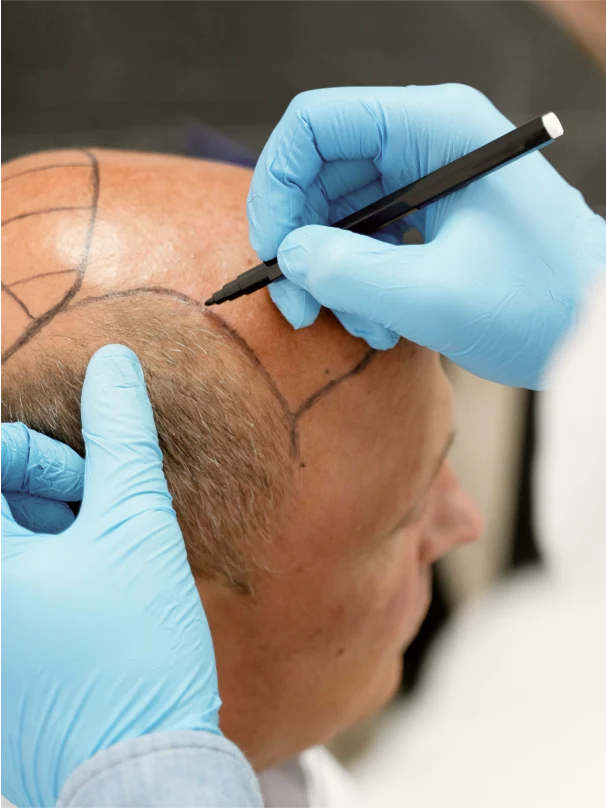
- Hairline design. The hairline and the areas to fill are drawn on your scalp and agreed with you before anything else. Our guide to hairline design explains how a natural line is planned.
- Local anaesthesia. The donor and recipient areas are numbed. You stay awake and feel pressure, not pain.
- Extraction. Follicles are taken one by one from the donor area.
- Sorting. The grafts are checked, sorted by the number of hairs they contain and kept cool. Single-hair grafts are set aside for the front line.
- Implantation. The grafts are placed with the implanter pens, row by row, following the direction of your natural hair.
When DHI is the right technique
DHI is strongest where precision matters more than speed: rebuilding a receded hairline and temples, adding density in an area that still has hair, and treating smaller zones. It is also the technique used for most women, who rarely want or need to shave. Our female hair transplant guide covers that case.
For large bald areas, such as a wide crown or an advanced pattern that needs well over 3,000 grafts, Sapphire FUE usually covers the ground faster. Many plans use both: DHI for the hairline and Sapphire FUE behind it. The technique comparison sets the two side by side.
DHI without shaving
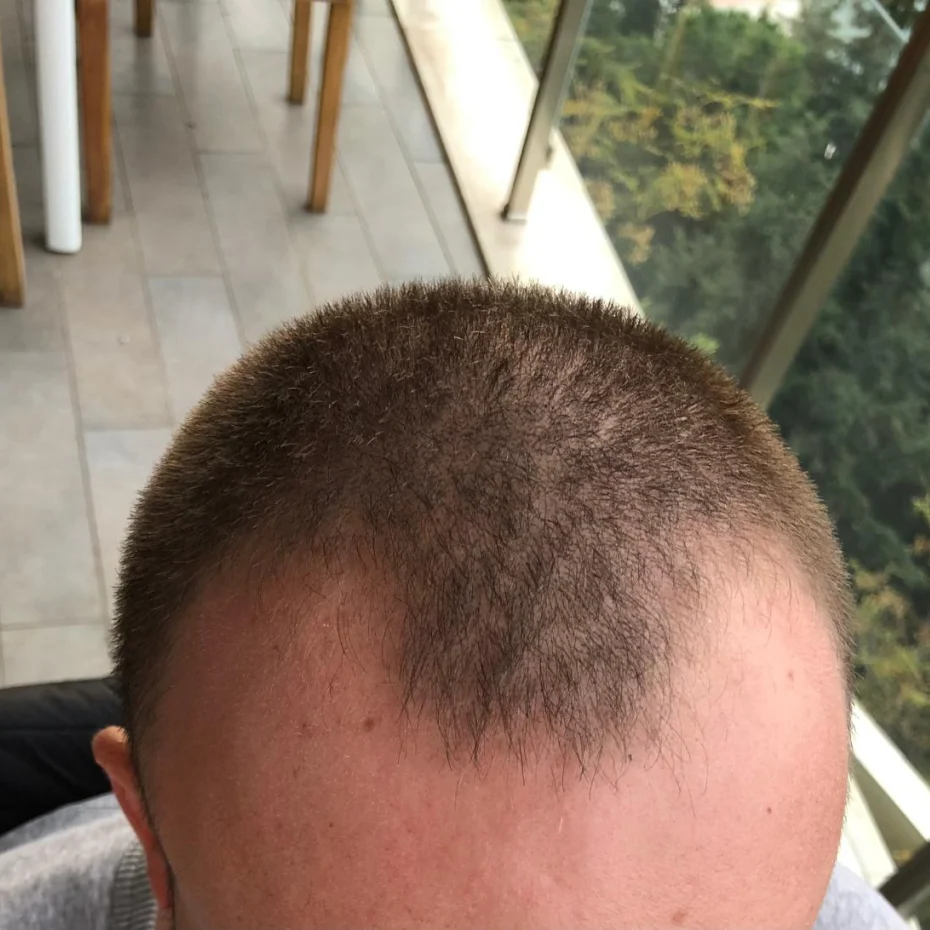
For smaller sessions the hair in the area being treated can be left long and the grafts placed between it, so the treated area is mostly hidden from the first day. The limit is the number of grafts: about 1,000 to 2,500 in one session. How it works, and who it suits, is explained in our guide to the unshaven DHI hair transplant.
Recovery and results
| Period | What happens |
|---|---|
| Days 1 to 3 | Mild swelling and redness while the grafts settle |
| Days 4 to 7 | Small crusts form; first gentle wash; most patients fly home and return to desk work |
| Week 2 | The crusts fall away and the scalp looks clean |
| Weeks 3 to 8 | The transplanted hairs shed. This is expected: the follicles stay in place |
| Months 3 to 6 | New growth starts, fine at first |
| Months 6 to 12 | The hair thickens and density builds |
| Months 12 to 15 | Final result |
Each stage, with what to do and what to avoid, is covered in our week-by-week recovery guide.
Aftercare in the first weeks
- Sleep with your head raised for the first nights, to limit swelling.
- Do not touch, scratch or rub the grafts for the first ten days.
- Start washing around day 4, with the gentle method the clinic shows you.
- Use the medication and the spray from your aftercare kit as directed.
- No gym, sauna or swimming for at least two weeks, and no direct sun for the first month.
- Avoid smoking and alcohol while the scalp heals: both slow healing.
Your written aftercare plan from the clinic always comes first.
What a DHI hair transplant costs in Albania
At Nouvelle Clinique hair transplant packages range from €1,500 to €3,000, depending on the number of grafts. The full package is €2,500 and covers the procedure, pre-operative blood tests, medication and care products, the hotel in Tirana, airport transfers and follow-up. Published figures put a 2,500-graft procedure in Italy or Germany at about €7,000, without travel or hotel. You receive a fixed written quote after a free consultation, and the date is reserved with a €200 deposit. The 2026 cost guide has the full breakdown.
Frequently asked questions
Is a DHI hair transplant permanent?
Yes. The transplanted follicles come from the zone that is genetically resistant to hair loss and keep growing for life. The hair around them can still thin over time, which is why a long-term plan matters.
Does DHI hurt?
The scalp is numbed with local anaesthesia, so during the procedure you feel pressure, not pain. The numbing injections sting briefly, and most patients describe mild soreness for a few days afterwards.
Do I have to shave my head for DHI?
Not always. Smaller sessions can be done without shaving the area being treated. For large sessions, shaving gives the team a clear view and a better result. The consultation confirms what your case needs.
How long does a DHI procedure take?
Usually 6 to 8 hours, with breaks. No-shave sessions take longer per graft and often last 7 to 9 hours.
Is DHI better than Sapphire FUE?
Neither is better in every case. DHI gives the most control graft by graft, which suits hairlines and density work. Sapphire FUE covers large areas more efficiently. The technique is chosen after your scalp has been assessed, and the two are often combined.
Will there be visible scars?
There is no linear scar. Extraction leaves tiny dots in the donor area that are hard to see once the hair grows back.
Find out whether DHI fits your case
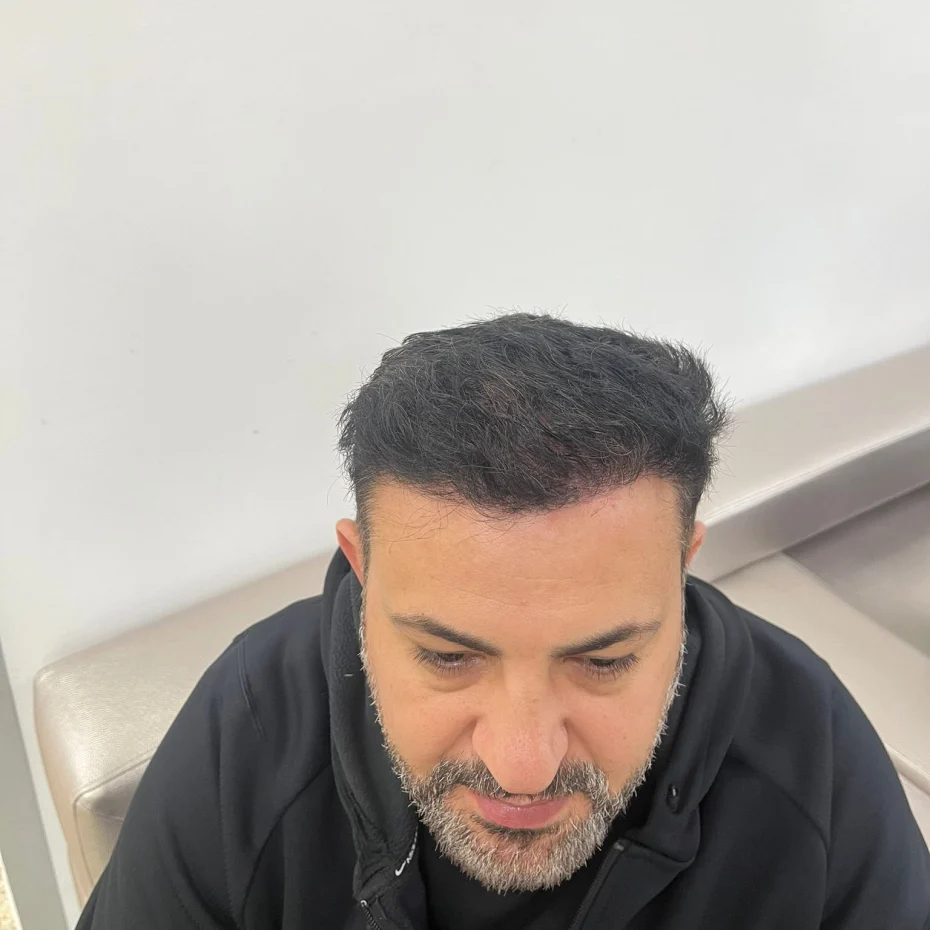
Book a free consultation and send photos of your hairline, crown and donor area. You will get a graft estimate, a technique recommendation with the reasons for it, and a fixed written quote. You can see healed cases in our before-and-after results.
Guides to read before you decide
- DHI vs Sapphire FUE: Which Hair Transplant Technique Is Right for You?
- Unshaven DHI Hair Transplant: How the No-Shave Method Works (2026)
- Hairline Design in a Hair Transplant: How a Natural Hairline Is Planned (2026 Guide)
- How Much Does a Hair Transplant in Albania Cost? 2026 Price Guide
- Hair Transplant Recovery Timeline: Week by Week Guide