
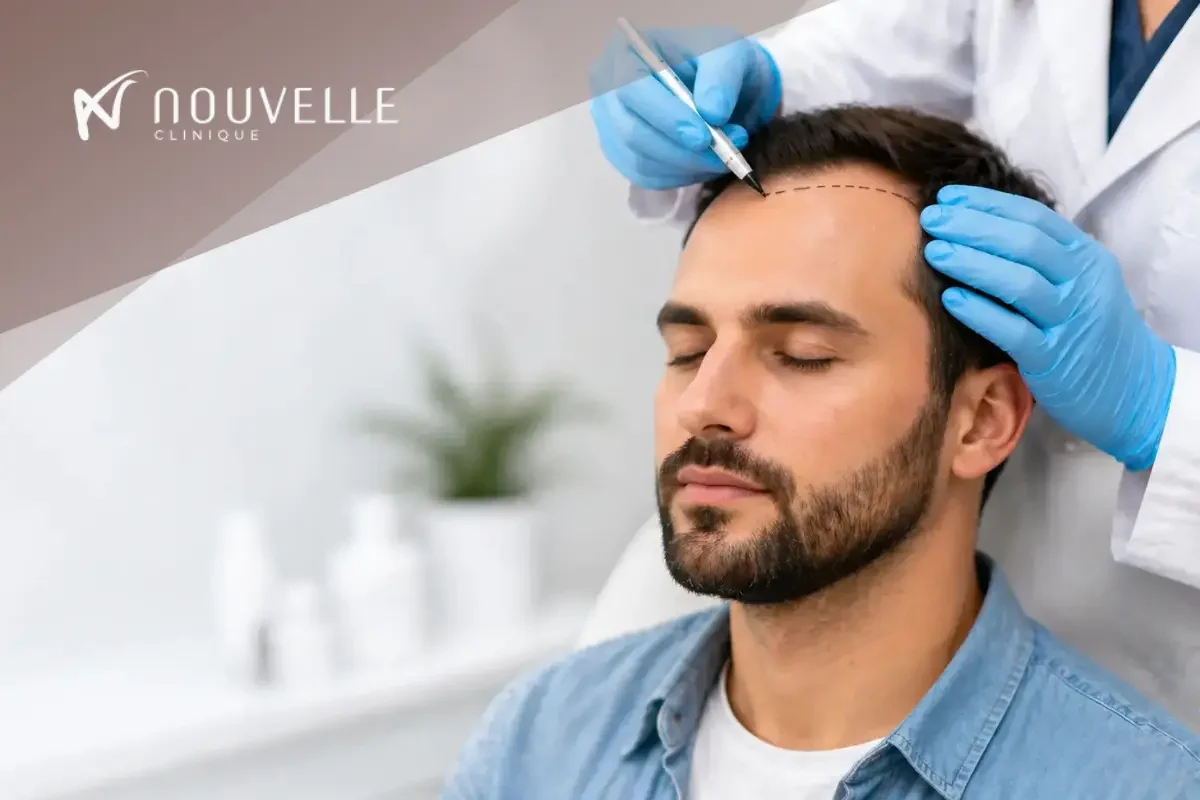
Older adults facing hair loss turn to hair transplant techniques such as FUE and DHI to regain their confidence. Just because you are an older adult doesn’t mean that hair restoration techniques will not work for you. It’s a myth that needs to be busted. And this is the blog that will do it for you.
Who can opt for hair restoration in Tirana?
Hair restoration can be opted for by people of any age, as long as they don’t have any serious medical conditions and are deemed suitable candidates for Haarwiederherstellung in Tirana.
There are no age restrictions for hair restoration treatments like FUE or DHI.
However, it’s usually not recommended at a very young age, as hair loss may still be progressing. In younger individuals, donor hair follicles can remain vulnerable to DHT, leading to continued hair fall even after the procedure. This also makes selecting a stable donor area more challenging. DHT (Dihydrotestosterone) is a hormone derived from testosterone. It plays a role in male development (like body hair and a deeper voice), but it’s also the main culprit behind pattern hair loss. Therefore, hair restoration in Tirana should be considered at any age over 35-40.
Who is a bad candidate for a DHI hair technique in Tirana?
Not everyone is an ideal fit for a hair transplant. The procedure works best when hair loss is stable, and there’s enough healthy donor hair to work with. Here are the main cases where someone may be a poor candidate:
1. Very young individuals (early 20s or below)
Hair loss may still be progressing. Transplanting too early can lead to unnatural patterns later as the surrounding hair continues to thin.
2. Insufficient donor hair
If the back or sides of the scalp don’t have enough dense, healthy follicles, there simply isn’t enough to transplant effectively.
3. Uncontrolled medical conditions
Conditions like unmanaged diabetes, bleeding disorders, or autoimmune diseases can affect healing and results.
4. Active scalp conditions
Issues such as infections, severe dandruff, or inflammatory scalp disorders should be treated before considering surgery.
5. Diffuse thinning (all over the scalp)
When hair loss is evenly distributed rather than confined to specific areas, it’s harder to identify a stable donor zone.
6. Unrealistic expectations
A transplant can improve appearance, but it won’t restore the same density you had as a teenager. Expectation mismatch is a common reason for dissatisfaction.
7. Certain types of hair loss
Conditions like alopecia areata or scarring alopecia may not respond well to transplants.
In short, the best candidates are those with stable hair loss, good donor hair, and realistic expectations. A proper consultation with a qualified specialist is essential before making a decision.
Is it painful to recover from the DHI hair technique in Tirana?
Recovery from a hair transplant is generally not very painful, but you can expect some mild discomfort for a few days.
Here’s what it typically feels like:
- First 1–3 days: You may feel soreness, tightness, or mild pain in the donor and transplant areas. This is usually manageable with prescribed painkillers.
- Swelling & tenderness: Some people experience swelling on the forehead and sensitivity on the scalp. This usually subsides within a few days.
- Itching (common): As the scalp heals, itching can occur—this is normal but shouldn’t be scratched.
- Scabbing & redness: Tiny scabs form around the transplanted follicles and fall off within 7–10 days.
- Back of the scalp discomfort: The donor area may feel tight or slightly painful for a bit longer.
Most people describe the recovery as more uncomfortable than painful. Within a week, discomfort significantly reduces, and normal activities can gradually resume.
If pain feels severe or lasts longer than expected, it’s important to check with your doctor.
Häufig gestellte Fragen
1. Posso dormire dopo una tecnica dhi hair a Tirana?
Yes, you can sleep after a hair transplant, but how you sleep matters a lot for the first few days. Keep in mind the following:
1. Sleep with your head elevated. Keep your head at about a 30–45° angle (use 2–3 pillows or a recliner). This helps reduce swelling.
2. Sleep on your back. Avoid sleeping on your side or stomach, as this can rub against the transplanted grafts and dislodge them.
3. Be careful with the graft area. Try not to let the transplanted area touch the pillow. Some clinics recommend using a neck pillow (like a travel pillow) to keep your head stable.
4. Expect some discomfort. You might find it slightly uncomfortable for the first few nights due to tightness or tenderness—but it improves quickly.
5. Follow this for about 5–7 days. After a week, you can gradually return to your normal sleeping position, depending on how well you’re healing.
In short: yes, you can sleep—but cautiously to protect the newly implanted hair follicles.
Your scalp will look socially “normal” in about 2–4 weeks, but the true cosmetic results take 9–12 months (sometimes up to 15 months for full de
Grafts can fall out, but this usually only happens within the first few days after a hair transplant if the scalp is rubbed, scratched, or bumped, as they are not yet fully secure. After about 7–10 days, the grafts become firmly anchored and are unlikely to dislodge. It’s important not to confuse this with the normal shedding phase that occurs 2–4 weeks later, in which the transplanted hair falls out while the follicles remain intact and will regrow hair over time.
You can usually start washing your hair about 48–72 hours after a hair transplant, but it must be done very gently and exactly as your surgeon advises.
In the first few washes, you’ll typically pour water gently over your scalp rather than apply direct pressure, and apply a mild shampoo by dabbing rather than rubbing. This helps protect the newly implanted grafts while keeping the area clean. By around 7–10 days, once the grafts are securely anchored and scabs have fallen off, you can gradually return to a more normal washing routine.
Always follow your clinic’s specific instructions, as timing and technique can vary slightly depending on the procedure and your healing progress.
Early signs of a successful hair transplant include smooth healing of the scalp, with redness, swelling, and scabbing settling within the first 7–10 days, and no signs of infection. The grafts remain intact without unusual bleeding, and any initial discomfort gradually fades. A key positive sign is shock loss, temporary shedding of transplanted hair within 2–4 weeks, which indicates the follicles are entering a new growth cycle. Overall, a healthy, calm scalp and normal shedding suggest the transplant is progressing as expected.
Medical review: the clinical information on this page is reviewed by the Nouvelle Clinique medical team under the supervision of Dr. Elvira Frangu, MD (Faculty of Medicine, University of Tirana; Order of Physicians of Albania, Registry No. 3973). This content is informational and is not a substitute for an individual medical consultation.